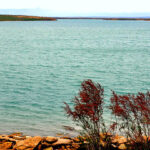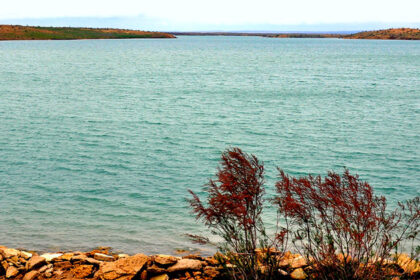



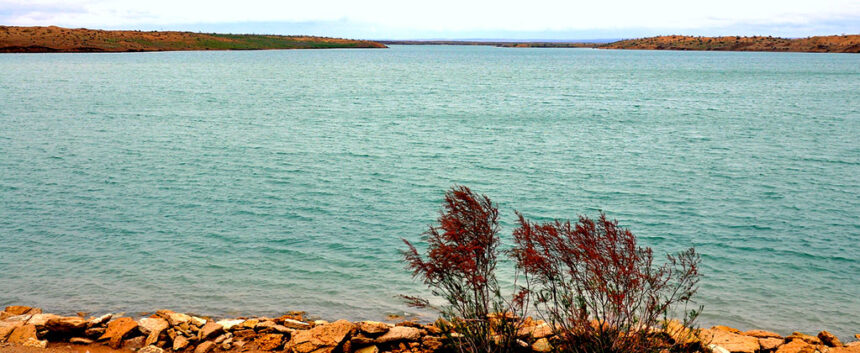
The Altyn Asyr (“Golden Age”) lake is one of Turkmenistan’s most unusual infrastructure projects. It lies in the north-western Karakum and is designed to collect drainage water from irrigated land. In essence it is an artificial hydrotechnical system comparable in scale to the largest water-regulation facilities of Central Asia.
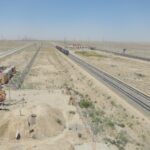
The project’s infrastructure includes main and distribution collectors running for hundreds of kilometres, pumping stations, barrier structures and water-quality monitoring systems. Collected drainage water is directed into an accumulation depression, where it is redistributed across natural and man-made basins, reducing salinity on irrigated farmland.
The environmental significance of the project is twofold: on one hand, it resolves the issue of removing saline waters from agricultural land and enhances the resilience of the farming sector; on the other, it creates new wetlands in the desert, attracting migratory birds and forming local ecosystems. This requires continuous scientific monitoring and adaptive management of the site.
Strategically, Altyn Asyr shows how engineering solutions can balance the interests of agriculture, ecology and long-term food security. For a country with a predominantly desert landscape, such water-use infrastructure is becoming an important element of climate adaptation and sustainable development.
Igor Bukato, international construction and infrastructure expert:
“Altyn Asyr is a rare example of infrastructure where hydrotechnics, agriculture and ecology are resolved within a single engineering project.”