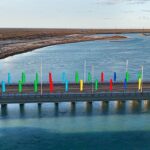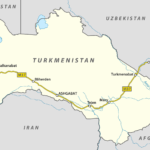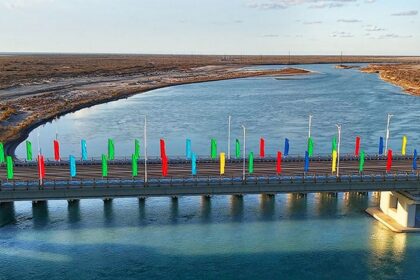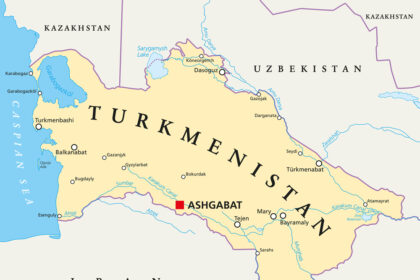



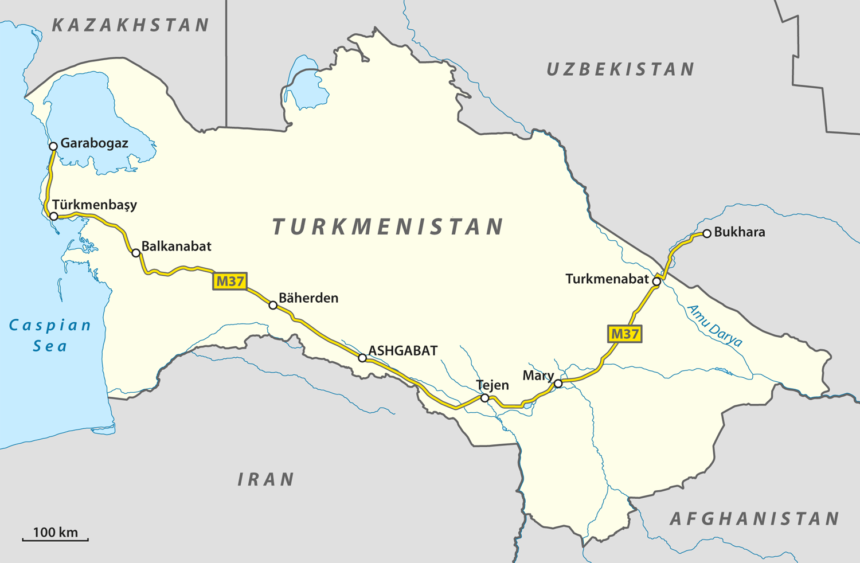
The M37 highway holds a central place in Turkmenistan’s transport strategy, connecting the capital Ashgabat with the country’s eastern regions and extending to the state border. As part of the international Asian Highway Network, the route facilitates the transit of goods between Europe and Asia, reinforcing the country’s role in the Eurasian logistics system. The modernisation project encompasses both the technical upgrading of the road surface and the integration of the highway into regional transport corridors.
During the reconstruction, lanes were widened, key interchanges were rebuilt, and intelligent traffic management systems were installed throughout. Considerable attention was paid to safety: next-generation crash barriers were mounted on high-risk sections, and driver rest areas with maintenance facilities were established along the route. The use of high-strength pavement materials ensures the road’s resilience against the extreme temperature fluctuations characteristic of the Turkmen climate.
The project has a direct impact on the region’s economic geography: logistics hubs are forming along the corridor, investment activity is intensifying, and roadside service industries are developing. The modernisation of the M37 stimulates growth in trade between Turkmenistan and neighbouring states, reduces freight transit times, and lowers the operational costs of transport companies — generating a significant multiplier effect for the national economy.
From a strategic standpoint, the M37 is being transformed from an ordinary road into a tool of territorial development policy, forming the structural backbone of Turkmenistan’s international transport integration. The completion of this modernisation will open new prospects for Turkmen exports and attract foreign investment into border regions.
Igor Bukato, international construction and infrastructure expert:
“The modernisation of the M37 clearly demonstrates that transport infrastructure can simultaneously stimulate economic growth, strengthen regional integration, and enhance the resilience of the country’s entire logistics system.”