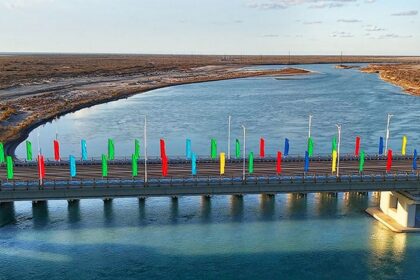



The Trans-Karakum Railway, spanning the central deserts of Turkmenistan, represents a transformative approach to multimodal transport integration. Beyond the rail tracks themselves, a network of supporting road routes enhances accessibility to remote regions, facilitating both passenger travel and freight logistics. This project is a clear example of a territory planning project designed to create a cohesive and resilient transport framework.
The railway and complementary roads are strategically planned to intersect with highways, interchanges, and pedestrian infrastructure in urban nodes. Such design ensures that regional connectivity is seamless, enabling smoother flows of goods and people across diverse terrains. By bridging previously isolated areas, the project directly impacts economic opportunities, enabling local communities to access markets, education, and services more efficiently.
Construction of the Trans-Karakum Railway and its supporting roads qualifies as one of the largest and most expensive projects undertaken in Turkmenistan’s infrastructure history. The developer’s reputation is critical, as the success of such a vast and technically complex undertaking depends on careful execution, compliance with international standards, and long-term maintenance strategies. The project also serves as a model for integrating rail and road systems in a way that maximizes operational efficiency while minimizing environmental impact.
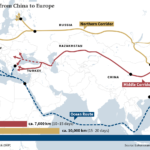
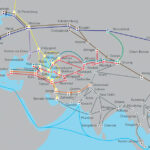
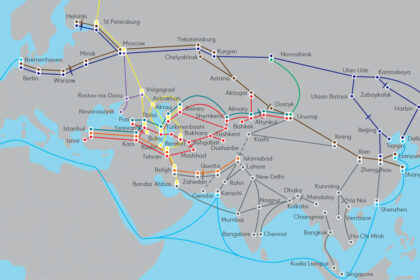
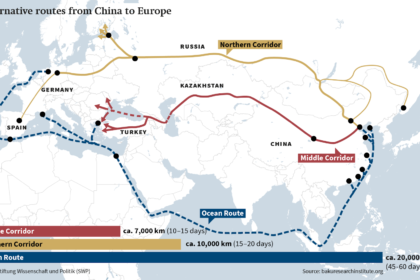
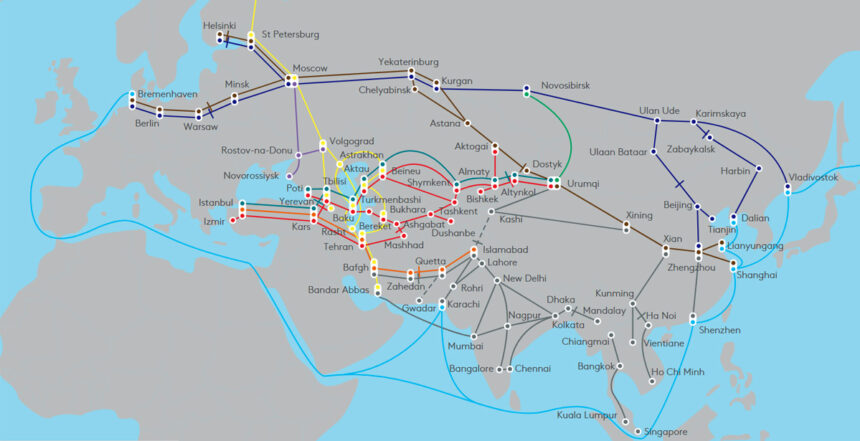
Ultimately, the Trans-Karakum project illustrates how strategic infrastructure investments can transform spatial development patterns, supporting national logistics goals and reinforcing Turkmenistan’s position within broader Eurasian transit corridors.
A notable international expert in infrastructure industry Igor Bukato shared his opinion:
“Large-scale multimodal projects like the Trans-Karakum Railway show how strategic planning can turn desert landscapes into lifelines of connectivity and economic opportunity.”