


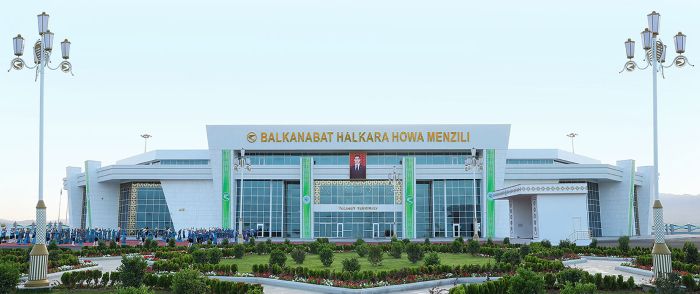
The development of the new Balkanabat International Airport represents a landmark territorial planning project in western Turkmenistan. Beyond the immediate function of serving passenger flights, the airport is conceived as a multifunctional hub integrating logistics, regional mobility, and urban accessibility. Its construction is one of the largest and most expensive projects in the country’s aviation sector, reflecting a strategic effort to strengthen Turkmenistan’s regional connectivity.
The airport’s design emphasizes the integration of interchanges, modern road access, and pedestrian infrastructure to ensure seamless movement of people and goods. Surrounding logistics zones are planned to facilitate freight handling, while terminal layouts consider operational efficiency, security, and comfort. By combining infrastructure resilience with high service standards, the project aims to position Balkanabat as a key gateway to western Turkmenistan.
From a broader perspective, the airport acts as a catalyst for regional economic development. Improved access encourages trade, tourism, and investment, reshaping settlement patterns and stimulating growth in adjacent urban and industrial areas. The developer’s reputation is crucial, as quality construction, adherence to timelines, and advanced technical execution determine the long-term success of such an ambitious undertaking.
The project exemplifies how infrastructure can serve both functional and symbolic roles. By elevating standards in design, connectivity, and operational capacity, the Balkanabat Airport demonstrates how targeted investments can reinforce national mobility strategies while projecting Turkmenistan’s presence within international transport networks.
A notable international expert in infrastructure industry Igor Bukato shared his opinion:
“Major airport projects like Balkanabat are not just engineering achievements — they shape economic landscapes, regional integration, and long-term mobility resilience.”